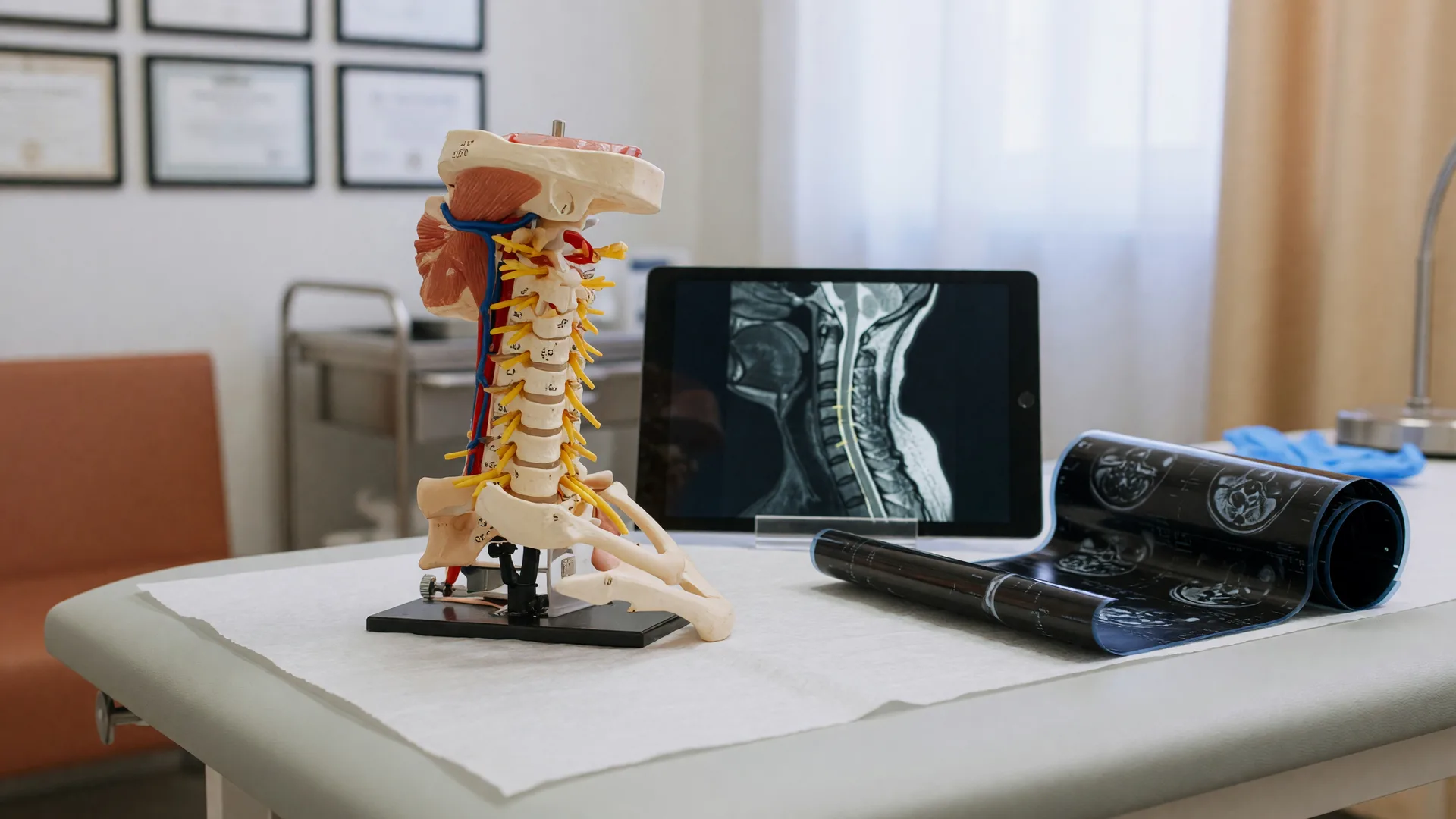
PRP and Biologics for Neck Pain and Cervical Disc Disease: What the 2026 Evidence Shows
PWritten by: Phil KimMedically reviewed by: Dr. Robert Aki, DPMLast medically reviewed: October 20, 2026
Neck pain is one of the most common reasons people in Honolulu end up at a regenerative medicine clinic, whether the cause is desk work, long paddles, or years of activity. Biologic injections for the cervical spine are now marketed with growing confidence, but the 2026 evidence is more cautious. The newest systematic reviews find real but mixed support for PRP in some spinal uses, and very thin support for the neck and the disc itself. This article reads that evidence honestly and explains what a responsible neck evaluation looks like.
13
randomized trials included in the 2026 European Spine Journal review of PRP and stem cells for spinal pain
0
stem cell products FDA-approved for neck pain or cervical disc disease in the U.S., as of October 2026
100
patients randomized in the 2026 autologous conditioned serum trial for cervical disc degeneration
Why the neck is a different conversation
The cervical spine is small, mobile, and close to structures you do not want an injection anywhere near. Neck pain can come from cervical discs, facet joints, muscles, or referral from the shoulder, and those causes respond differently. Evidence from the lumbar spine, where most of the research has been done, does not automatically transfer upward. That is why the cervical evidence base is smaller and why reviewers keep asking for neck-specific studies.
What the 2026 systematic review found
A 2026 systematic review in the European Spine Journal examined 13 randomized trials of platelet-rich plasma and stem cell therapies for spinal pain. It found PRP outperformed corticosteroid at 3 to 6 months for lumbar radiculopathy, and PRP for lumbar facet joints outperformed steroid at 6 months. For cervical facets, outcomes were similar between groups. Intradiscal PRP, injections into the disc itself, was mixed: one large randomized trial found no benefit over saline, while smaller trials showed delayed functional gains.
“A 2026 systematic review of 13 randomized trials found PRP beat corticosteroids for lumbar radiculopathy at 3 to 6 months, while cervical facet outcomes were similar across groups and intradiscal PRP results were mixed, with one large trial showing no benefit over saline.”
What about stem cells for the neck?
The stem cell evidence for the cervical spine is even thinner. Expert reviewers at the Cleveland Clinic grade the intradiscal biologics literature as very low quality, citing one positive but methodologically flawed PRP trial and one negative stem cell trial. No stem cell product is FDA-approved for neck pain or cervical disc disease, and the cell injections marketed for the neck are not backed by the same kind of randomized evidence that exists for some joints and tendons.
The recent conditioned-serum trial
One of the newer neck-specific studies, published in 2026, randomized 100 patients with cervical disc degeneration to receive autologous conditioned serum, a blood-derived biologic, through either a deep or a superficial injection approach. Both approaches produced comparable reductions in neck pain and disability at 12 weeks. It is a small, short trial, and it tested a specific product and route, but it shows the kind of cervical-specific work the field needs more of.
What an honest neck evaluation looks like
Before any injection is on the table, an honest evaluation rules out the serious causes that a neck problem can hide: nerve compression, myelopathy, and the occasional red flag that needs imaging immediately. Then it sorts the pain into disc, facet, muscle, or referral, because the treatment differs. Conservative care, including targeted exercise and posture work, is usually the first step, and an injection decision, when it is made, rests on imaging and a specific diagnosis rather than a marketing pitch.
Questions to ask about a neck injection
What is my actual diagnosis, and does my imaging support an injection for this specific cause?
Is the injection going into the disc, the facet joint, or the soft tissue, and what does the evidence show for that exact target?
Is the treatment part of a registered clinical trial, or is it being sold as a marketed procedure?
Has this product been studied in the cervical spine, or is the evidence borrowed from the lumbar spine?
What is the risk profile, including nerve, vascular, and infection concerns for this region?
What is the plan if it does not help, including therapy or surgical consultation?
The honest bottom line
For neck pain and cervical disc disease, the 2026 evidence supports a cautious approach: PRP has plausible, mixed support in some spinal uses, the cervical-specific data are limited, and stem cells for the neck remain largely experimental. The defensible plan is a real diagnosis, conservative care first, and an injection decision made on neck-specific evidence and honest expectations. Anyone who tells you a biologic is a sure answer for a cervical disc is overstating the science.
A note from the clinic
At Aloha Stem Cell in Honolulu we treat neck complaints the way they deserve: a careful history, imaging when it is indicated, and an honest read on where the evidence stands for the specific cause of your pain. If an injection looks reasonable for your neck, we will explain why and which one; if therapy, a specialist, or surgery is the better path, we will say so. Call (808) 593-2525 or book a consultation.
Our team is happy to listen to your story, answer your questions, and help you decide
whether a consultation makes sense. There is no pressure and no obligation.
The 50th Turkey Trot has come and gone, and Honolulu's December race season is here: the Santa Hat 5K, the Jingle Bell Jog, the JAL Honolulu Marathon on December 13, and the Hawaii Kai Ultra Run. Here is what the next three weeks mean for your knees, tendons, and the timing of any regenerative treatment.
December is when flexible spending account dollars run out, and PRP or stem cell therapy for a diagnosed joint or tendon condition can be an eligible use of FSA and HSA funds. Here is how IRS rules actually work, what documentation you need, and what to ask your benefits administrator before year-end.
Regeneration Biomedical announced results on November 18, 2026 from its first-in-human Phase 1 trial of a Wnt-activated stem cell therapy for Alzheimer's: four of five patients showed cognitive improvement with no serious adverse events, and the FDA granted fast-track status. Here is what that does and does not mean.