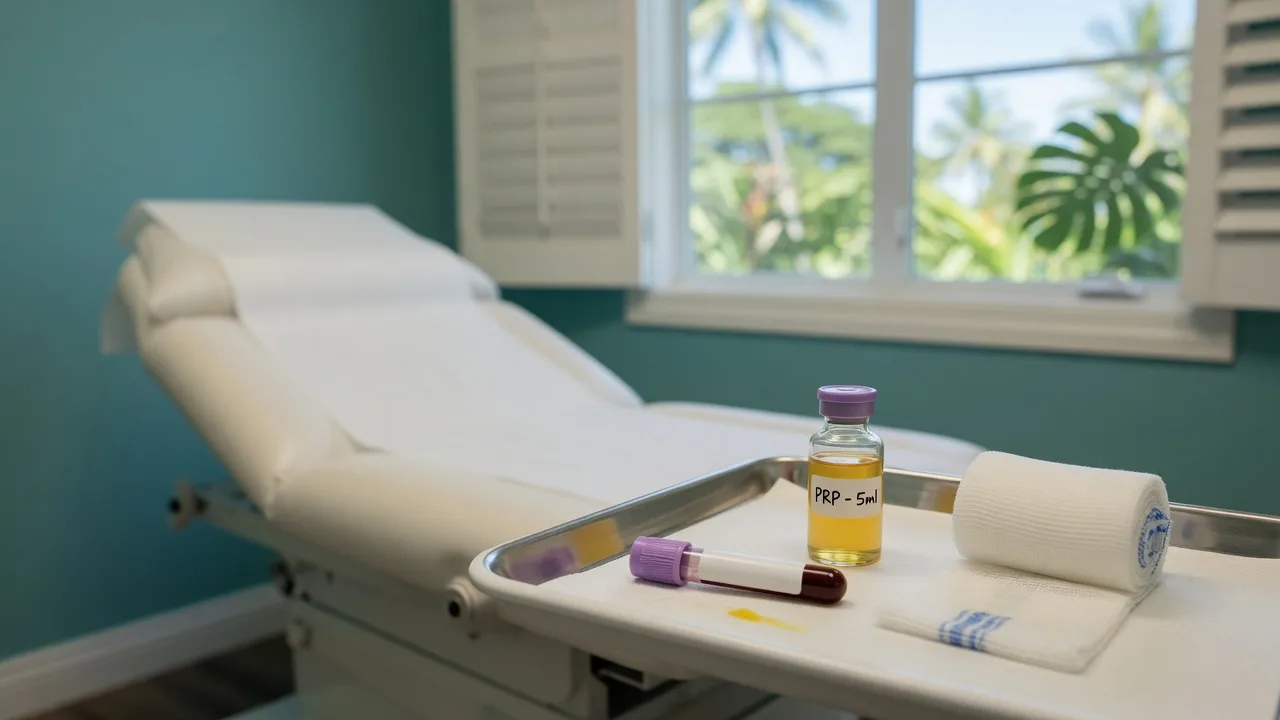
PRP for Diabetic Foot Ulcers and Chronic Wounds: What the 2026 Evidence Shows
PWritten by: Phil KimMedically reviewed by: Dr. Robert Aki, DPMLast medically reviewed: October 27, 2026
A diabetic foot ulcer is a break in the skin on the foot that does not heal normally, and it is one of the most serious complications of diabetes, carrying real risks of infection and, in the worst cases, amputation. Platelet-rich plasma (PRP), prepared from a patient's own blood, is increasingly studied as a way to support wound healing, and the 2025-2026 evidence includes several large meta-analyses with concrete results. This article reads that evidence honestly, including what it does and does not support, with attention to foot health in Hawaii, where diabetes and prediabetes are common.
1.5x
higher chance of complete healing of diabetic foot ulcers with PRP versus conventional care in a 2025 meta-analysis of 15 randomized trials and 1,010 patients
~19 days
shorter average healing time reported with PRP in that same meta-analysis, with no increase in adverse events
87.5%
complete ulcer healing at 12 weeks in a 2025 randomized trial of 60 patients, versus a significantly lower rate with traditional care
Why chronic wounds deserve serious attention
When diabetes damages nerves and circulation, small cuts, blisters, and pressure points on the feet can turn into ulcers that struggle to heal. Standard care, including cleaning the wound, dressing it, relieving pressure or offloading, controlling blood sugar, and treating infection, is the foundation of every good outcome. PRP has been studied as an addition to that foundation, not a replacement for it, because it brings concentrated growth factors from a patient's own platelets to the wound bed.
What the 2025-2026 evidence shows for diabetic foot ulcers
A 2025 meta-analysis of 15 randomized trials and 1,010 patients found that PRP significantly improved complete healing of diabetic foot ulcers compared with conventional care, roughly a 1.5-fold higher chance of healing, and shortened average healing time by about 19 days, with no increase in treatment-related adverse events. An updated 2025 network meta-analysis of 51 randomized trials and 3,401 patients similarly found PRP improved healing rate versus standard of care. A 2025 randomized trial of 60 patients reported complete ulcer healing in 87.5 percent of the PRP group at 12 weeks, whether injected or applied topically, versus a significantly lower rate with traditional care alone.
“In a 2025 meta-analysis of 15 randomized trials and 1,010 patients, platelet-rich plasma significantly improved complete healing of diabetic foot ulcers versus conventional care, roughly a 1.5-fold higher chance of healing, and shortened average healing time by about 19 days, with no increase in treatment-related adverse events.”
The picture beyond the diabetic foot
PRP has been studied across chronic wound types, not just the diabetic foot. A systematic review and meta-analysis of 13 studies found significantly higher healed-ulcer rates with PRP and platelet-rich fibrin in venous leg ulcers, with a pooled relative risk of about 2.9, and a 2026 meta-analysis reported roughly a 1.5-fold higher odds of complete healing for venous ulcers, though with notable variation between studies. The consistent theme is that PRP appears to be a useful adjunct to good wound care across diabetic, venous, and pressure-related wounds, with effect sizes that vary by wound type.
“A systematic review and meta-analysis of 13 studies found significantly higher healed-ulcer rates for PRP and platelet-rich fibrin in venous leg ulcers, with a pooled relative risk of about 2.9, positioning these biologics as an evidence-supported adjunct to standard wound care.”
The honest caveats
The word that matters most is adjunct. PRP does not replace offloading, infection control, blood sugar management, or proper wound dressings, and several analyses report high variability between studies, which is common when wound types and care protocols differ. Effect sizes are real but not uniform, and a wound that is not improving under standard care deserves a careful specialist evaluation, not an injection sold as a shortcut. Healing also depends heavily on circulation, glucose control, and whether the foot is protected from pressure, factors no biologic can fix alone.
How this connects to foot health in Hawaii
Foot health carries real weight in Hawaii. Based on CDC blood glucose and A1C testing, an estimated two in five Hawaii adults have prediabetes, a share that runs somewhat higher than the national average, and roughly one in ten adults in the state has been diagnosed with diabetes. That makes careful foot checks, prompt attention to any sore that lingers, and honest, evidence-based wound care especially relevant here. Because the clinic's care is reviewed by a doctor of podiatric medicine, foot concerns are evaluated with the specialty perspective they deserve.
Questions to ask about wound care and PRP
Is the wound being treated with standard care first: cleaning, dressings, offloading, and blood sugar and infection control?
Has a specialist evaluated circulation, nerve function, and bone involvement before any biologic is discussed?
What does the published evidence show for PRP in my specific type of wound, and what results should I reasonably expect?
Is PRP being offered as an addition to standard care, or in place of it?
Who is preparing and applying the PRP, and what is their experience with wound care?
What is the plan if the wound does not improve, and how will healing be tracked?
The honest bottom line
The 2025-2026 evidence gives PRP a real but clearly defined role in chronic wound healing: it roughly raises the chance of complete healing and shortens healing time for diabetic foot ulcers, with a similar supportive picture in venous ulcers, but only as an addition to rigorous standard care. If you or a family member in Hawaii is managing a slow-healing wound, the responsible first step is a careful evaluation by a specialist who understands diabetes, circulation, and the foot.
A note from the clinic
At Aloha Stem Cell in Honolulu we take foot and leg concerns seriously and evaluate them carefully, including with input from our podiatric medicine review. We will give you an honest read on whether a biologic like PRP is supported for your specific situation, and we will be just as direct when standard wound care or a specialist referral is the better answer. Call (808) 593-2525 or book a consultation.
Our team is happy to listen to your story, answer your questions, and help you decide
whether a consultation makes sense. There is no pressure and no obligation.
The 50th Turkey Trot has come and gone, and Honolulu's December race season is here: the Santa Hat 5K, the Jingle Bell Jog, the JAL Honolulu Marathon on December 13, and the Hawaii Kai Ultra Run. Here is what the next three weeks mean for your knees, tendons, and the timing of any regenerative treatment.
December is when flexible spending account dollars run out, and PRP or stem cell therapy for a diagnosed joint or tendon condition can be an eligible use of FSA and HSA funds. Here is how IRS rules actually work, what documentation you need, and what to ask your benefits administrator before year-end.
Regeneration Biomedical announced results on November 18, 2026 from its first-in-human Phase 1 trial of a Wnt-activated stem cell therapy for Alzheimer's: four of five patients showed cognitive improvement with no serious adverse events, and the FDA granted fast-track status. Here is what that does and does not mean.