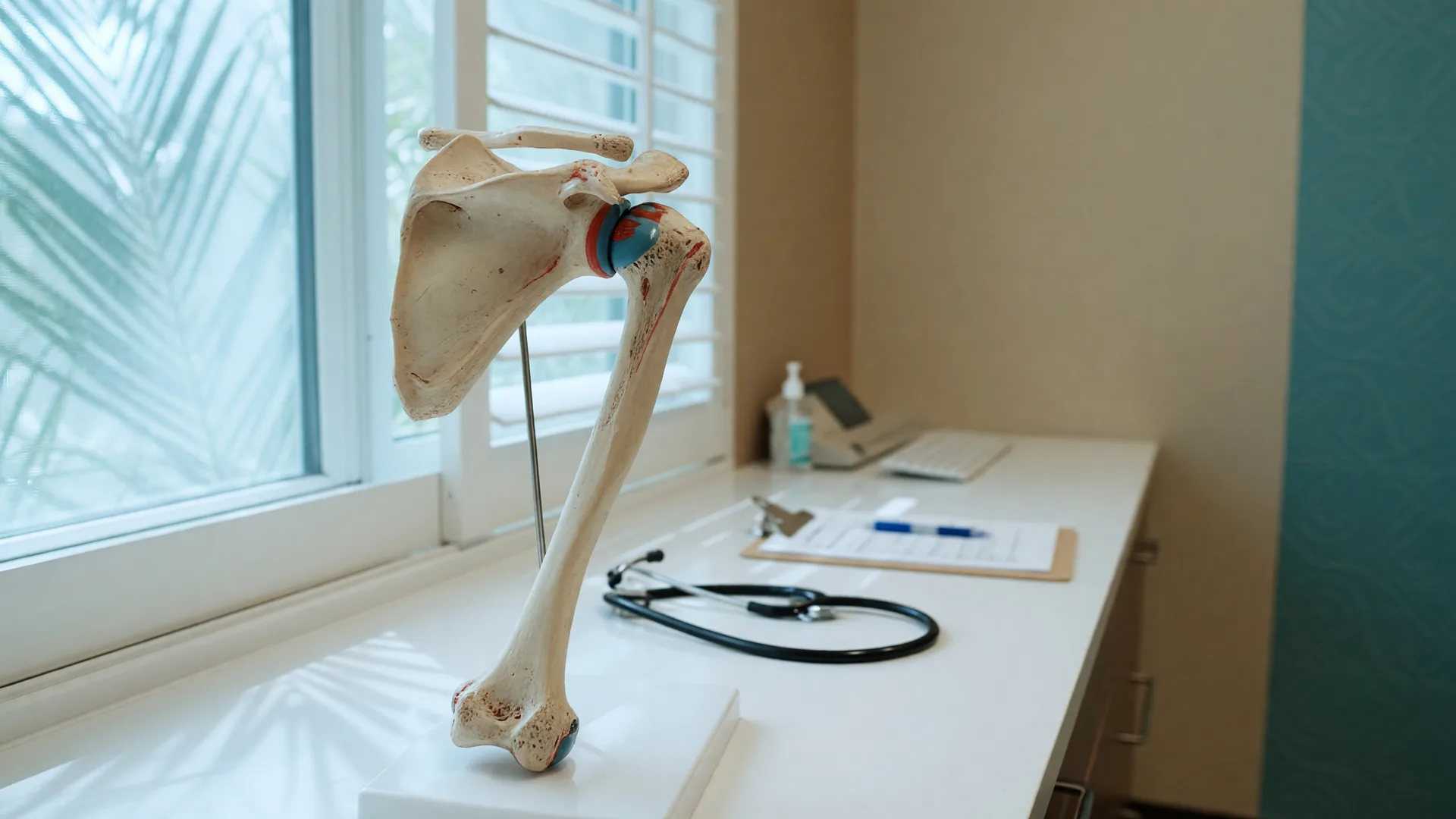
PRP for Shoulder Pain and Rotator Cuff Problems: A 2026 Evidence Review
PWritten by: Phil KimMedically reviewed by: Dr. Robert Aki, DPMLast medically reviewed: October 2, 2026
Shoulder pain, and rotator cuff problems in particular, is one of the most common reasons patients seek regenerative medicine. Platelet-rich plasma (PRP) has been studied extensively for the shoulder over the past two years. This article reviews the latest 2025 and 2026 evidence on PRP for rotator cuff tendinopathy and tears, including how it compares with corticosteroid injections and how it is used alongside surgery, so you can weigh your options honestly before a consultation.
6 months
when a durable PRP advantage over steroids tends to appear
~15%
lower rotator cuff retear rate with PRP-augmented repair in 2025 meta-analyses
5
clinical providers on the team
Why the shoulder is different from the knee
PRP is often talked about generically, but the evidence for it is body-part specific. The shoulder is built for mobility, and the rotator cuff tendons work hard during almost every arm movement, so injections here address tendons more often than joint cartilage. That changes both how PRP is delivered and how the results should be read, which is why shoulder research is a separate conversation from knee research.
PRP versus corticosteroid injections for cuff tendinopathy
For rotator cuff tendinopathy, the picture depends heavily on timing. A 2026 meta-analysis of 10 randomized trials including 591 patients found no meaningful difference between PRP and corticosteroid injections in the first weeks, but a modest PRP advantage emerged at six months. A 2025 randomized trial of 107 patients with partial-thickness tears found corticosteroids provided better short-term pain relief. The honest summary is that steroids tend to act faster, while some patients get a later, more durable benefit from PRP.
“A 2026 meta-analysis of 10 randomized trials found PRP offers a modest but durable functional benefit over corticosteroid for rotator cuff tendinopathy, with the difference emerging around six months rather than in the first weeks.”
PRP alongside rotator cuff repair surgery
PRP is also used to support surgical repair. A 2025 meta-analysis of 13 randomized trials including 880 patients found that adding PRP to rotator cuff repair modestly improved clinical outcome scores, including the Constant score by about 2 points and the UCLA score by about 1.8 points. Another 2025 analysis reported that PRP reduced the retear rate at about 24 months by roughly 15%. These are real but modest gains: PRP nudges healing along rather than transforming the result of surgery.
“Adding PRP to rotator cuff repair modestly improves recovery in 2025 meta-analyses, mainly by reducing retear rates at about 24 months and improving outcome scores by a few points.”
Can a PRP injection replace surgery?
A direct answer: no 2025 or 2026 randomized trial compares a standalone PRP injection with surgery for a full-thickness rotator cuff tear, so there is no honest evidence that an injection alone replaces surgery in the shoulder. The AAOS 2025 clinical practice guideline for rotator cuff injuries notes that healed repairs generally outperform nonoperative management and supports patient-specific, evidence-based decisions. That does not mean PRP has no place; it means the recommendation should depend on the size and shape of the tear, the quality of the tendon tissue, and your own goals.
The 2026 trial that showed structural change
One of the most interesting shoulder results of 2026 came from a prospective randomized trial in Knee Surgery, Sports Traumatology, Arthroscopy. In patients with partial-thickness supraspinatus tendon tears confirmed on MRI, adding ultrasound-guided PRP to physical therapy produced a roughly two-thirds reduction in MRI-measured tear volume, far beyond what physical therapy alone achieved. It is a single-center trial with a modest sample, and partial tears are not full tears, but it is the kind of structural signal the field has been waiting for, and it strengthens the case that PRP plus structured rehab deserves a real conversation for the right partial tear.
“A 2026 prospective randomized trial found that adding ultrasound-guided PRP to physical therapy reduced MRI-measured partial supraspinatus tear volume by roughly two-thirds, versus physical therapy alone.”
Questions to ask before shoulder PRP
Is my pain coming from the rotator cuff, the shoulder joint, or another structure?
Is there a full-thickness tear, and is surgery genuinely on the table for my pattern?
Have I tried physical therapy and activity modification first?
Which studies support this specific preparation, and did the benefit appear at 6 months or only short term?
What are realistic expectations at 6 and 12 months, and how will we measure progress?
A note from the clinic
Shoulder care deserves a diagnosis before any injection. At Aloha Stem Cell in Honolulu we start by understanding what is really driving your shoulder pain, including imaging when it helps, and only then talk about whether PRP, rehab, or another path fits you. Call (808) 593-2525 to book a low-pressure consultation.
Our team is happy to listen to your story, answer your questions, and help you decide
whether a consultation makes sense. There is no pressure and no obligation.
The FDA now lists Regenecyte, a cord blood stem cell product, among approved cellular therapies. It is a real milestone for blood stem cell transplant patients, and it is not a treatment for joint pain. Here is what the approval is, what it is not, and why it matters when you read stem cell news.
In September 2026 the FDA granted Fast Track status to an experimental cell therapy for ALS, and in August researchers presented new Phase 1/2 data on a stem cell therapy for Parkinson's. Both are real advances and both remain investigational. Here is the honest read.
A stem cell-derived islet therapy restored insulin production in early trials, with 10 of 12 patients insulin-independent at one year. Here is what the 2025-2026 results show, what the FDA has and has not done, and what it means for people with diabetes.