Stem Cells for Macular Degeneration: What the 2026 Eye Research Shows
PWritten by: Phil KimMedically reviewed by: Dr. Robert Aki, DPMLast medically reviewed: November 3, 2026
Age-related macular degeneration (AMD) is a leading cause of vision loss in older adults, and it has long had no treatment that restores lost vision. In late 2025 and through 2026, several early-stage trials using stem cell derived retinal pigment epithelial (RPE) cells reported something genuinely new: measurable vision gains in some participants. These remain phase 1 and 2 studies, not approved treatments, and this article reads the results honestly for Honolulu residents keeping up with the science.
21
additional eye-chart letters read at 12 months by the low-dose arm of the RPESC-RPE-4W dry AMD trial, roughly four lines of vision
3
patients with the worst baseline vision in the trial, who showed the largest improvements
2025
the year the FDA granted Regenerative Medicine Advanced Therapy (RMAT) designation to the RPESC-RPE-4W program
The cell type behind the headlines
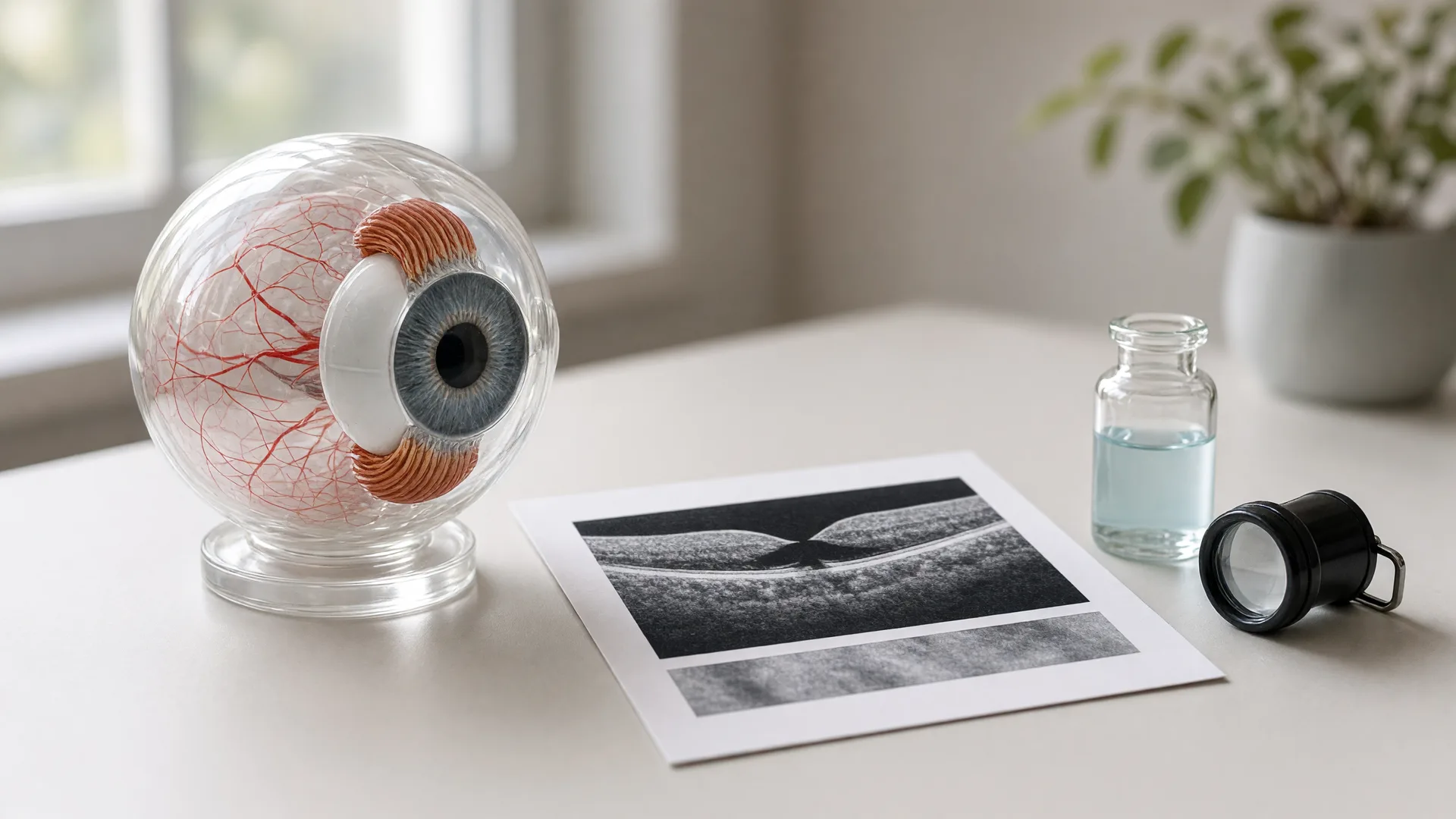
The retina depends on a single layer of retinal pigment epithelial cells to keep the light-sensing photoreceptors healthy. In dry AMD, that RPE layer fails and photoreceptors die, which is why vision loss is progressive. The strategy behind the new trials is straightforward in concept and extremely difficult in practice: transplant healthy RPE cells into the damaged retina.
The most striking results so far
A phase 1/2a trial by Luxa Biotechnology (NCT04627428) used RPE stem cells derived from donated eye-bank tissue, transplanted under the retina of patients with advanced dry AMD. At 12 months, the low-dose group, treated with 50,000 cells, read roughly 21 additional letters on an eye chart, and the three patients with the worst starting vision improved the most. The trial has continued dosing additional patients at higher cell counts, and the FDA granted the program Regenerative Medicine Advanced Therapy (RMAT) designation in early 2025.
“At 12 months in the low-dose arm of the RPESC-RPE-4W trial, patients with advanced dry AMD read about 21 additional letters on an eye chart, with the three worst-seeing patients improving the most.”
Other programs moving forward
The field is broadening. In January 2026, researchers at the USC Roski Eye Institute launched a phase 2b trial of stem cells delivered on an ultra-thin implant designed to replace damaged retinal cells. Early phase 1 findings for Astellas' ASP7317, a subretinal RPE cell transplant for geographic atrophy, were presented in May 2026 with possible signs of functional improvement. All of these programs remain early-stage and investigational.
The honest limits
These are small, early, mostly open-label trials. The vision gains are encouraging, but they come with real caveats: small patient numbers, no placebo comparison in most arms, and results that vary by patient and dose. None of these therapies is FDA-approved, none is available at clinics, and patients should treat any clinic claim that stem cells can restore vision with deep skepticism.
A note from the clinic
At Aloha Stem Cell we stay current on regenerative medicine across the field so we can answer your questions honestly. Eye therapies like RPE transplants are a distinct, regulated research area with no relation to the autologous joint and tendon treatments we provide. Whatever the condition, bring the specific claim and the specific source to a consultation and we will help you read it. Call (808) 593-2525.
Our team is happy to listen to your story, answer your questions, and help you decide
whether a consultation makes sense. There is no pressure and no obligation.
The 50th Turkey Trot has come and gone, and Honolulu's December race season is here: the Santa Hat 5K, the Jingle Bell Jog, the JAL Honolulu Marathon on December 13, and the Hawaii Kai Ultra Run. Here is what the next three weeks mean for your knees, tendons, and the timing of any regenerative treatment.
December is when flexible spending account dollars run out, and PRP or stem cell therapy for a diagnosed joint or tendon condition can be an eligible use of FSA and HSA funds. Here is how IRS rules actually work, what documentation you need, and what to ask your benefits administrator before year-end.
Regeneration Biomedical announced results on November 18, 2026 from its first-in-human Phase 1 trial of a Wnt-activated stem cell therapy for Alzheimer's: four of five patients showed cognitive improvement with no serious adverse events, and the FDA granted fast-track status. Here is what that does and does not mean.