PWritten by: Phil KimMedically reviewed by: Dr. Robert Aki, DPMLast medically reviewed: September 4, 2026
PRP and stem cell therapy are both regenerative treatments, but they are not the same thing. PRP concentrates healing platelets from your own blood, while stem cell therapy uses cells from your own bone marrow or fat tissue. Understanding the difference helps you ask better questions at your consultation and choose with confidence.
5
clinical providers on the team
22+ years
combined clinical experience
12+
treatments & services offered
Both treatments start with your own body
Neither treatment uses donor tissue or synthetic products at Aloha Stem Cell. Both begin with a small sample from your own body: blood for PRP, and bone marrow or fat tissue for cell-based therapy. Because the materials are your own, the risk of allergic or immune reaction is very low for both approaches.
What PRP is and what it does
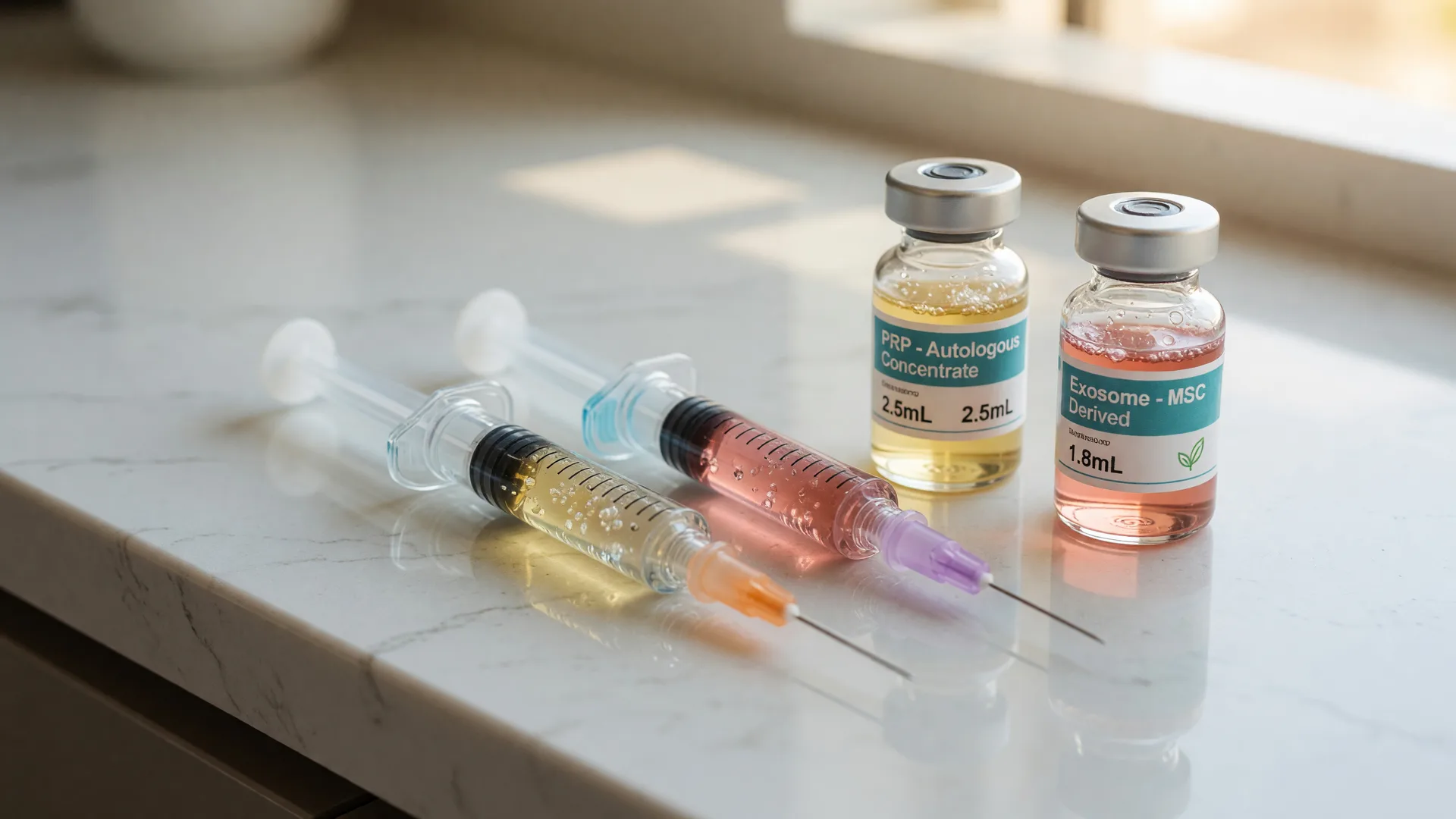
PRP, or platelet-rich plasma, starts with a blood draw. A centrifuge separates out a concentrated layer of platelets, which are rich in growth factors that call healing cells to the area. A clinician then injects the concentrate into the injured joint, tendon, or ligament. PRP is best understood as signaling and support therapy:it creates better conditions for healing rather than replacing tissue itself.
What stem cell therapy is and what it does
Cell-based therapy collects living cells, typically from bone marrow aspirate or adipose, or fat, tissue, concentrates them in a clinical setting, and injects them into the damaged area. Beyond signaling molecules, these cells can respond to the local environment and contribute to tissue repair pathways. It is a more involved procedure than PRP, starting with a collection step and a longer preparation process.
How do the evidence and the procedure compare?
PRP has the larger body of published research, especially for knee osteoarthritis and certain tendon injuries, but results across trials vary. Cell-based therapy is an earlier field, with promising but more limited data. In terms of the visit itself, PRP is usually quicker, while cell-based treatment includes an extra collection and preparation step. Neither approach should ever be sold as a guaranteed cure.
Which one fits which problem?
PRP is often discussed first for tendon injuries, ligament sprains, muscle strains, and mild to moderate joint degeneration
Cell-based therapy is commonly discussed for more advanced osteoarthritis, larger cartilage defects, and areas where more robust tissue support may be needed
Some plans combine both: PRP for targeted healing signals and cell concentrate for structural support
The right choice depends on your imaging, your anatomy, your activity goals, and how your body has responded so far
Frequently asked questions
Is one treatment better than the other? Not universally. For some conditions PRP has stronger evidence, and for other conditions,the cell-based approach may be the better fit. The answer is specific to your case.
Do the injections hurt? Both involve a guided injection into the target area. Clinics typically numb the area first, and most people describe the injection itself as the main discomfort.
Can I receive both? Sometimes, as part of one carefully designed plan. Ask whether combining the two adds genuine value for your condition.
Are they alternatives to surgery? They are non-surgical options but not guaranteed outcomes. For some patients they may delay or reduce the need for joint replacement, while for others surgery remains the better answer.
The best way to know which path fits you is a real conversation, not a brochure. Call our team at (808) 593-2525 or book a consultation, and we will walk you through PRP versus cell-based therapy honestly.
Want to talk through your own situation?
Our team is happy to listen to your story, answer your questions, and help you decide
whether a consultation makes sense. There is no pressure and no obligation.
The FDA now lists Regenecyte, a cord blood stem cell product, among approved cellular therapies. It is a real milestone for blood stem cell transplant patients, and it is not a treatment for joint pain. Here is what the approval is, what it is not, and why it matters when you read stem cell news.
In September 2026 the FDA granted Fast Track status to an experimental cell therapy for ALS, and in August researchers presented new Phase 1/2 data on a stem cell therapy for Parkinson's. Both are real advances and both remain investigational. Here is the honest read.
A stem cell-derived islet therapy restored insulin production in early trials, with 10 of 12 patients insulin-independent at one year. Here is what the 2025-2026 results show, what the FDA has and has not done, and what it means for people with diabetes.