Shockwave Therapy for Chronic Pain: What the Research Shows
PWritten by: Phil KimMedically reviewed by: Dr. Robert Aki, DPMLast medically reviewed: September 10, 2026
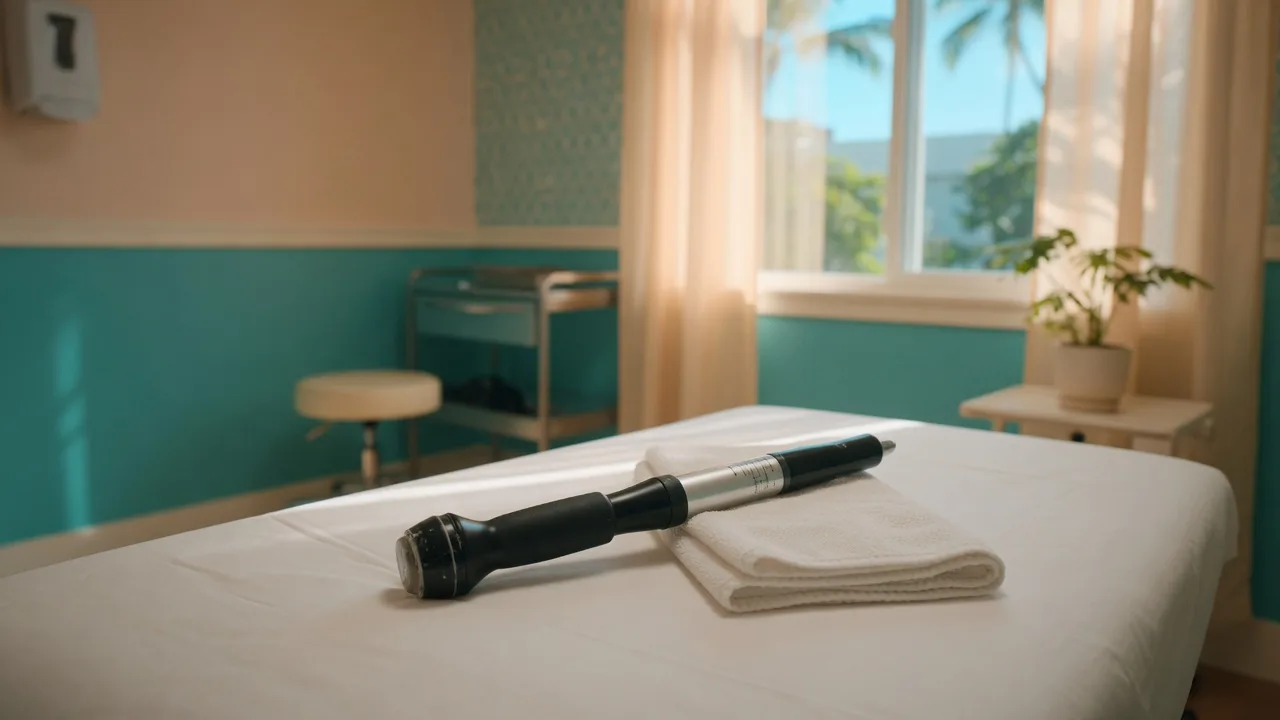
Shockwave therapy, also known as extracorporeal shockwave therapy (ESWT) or shockwave under brand names like Softwave, uses focused acoustic energy to treat pain without surgery. At Aloha Stem Cell in Honolulu we offer it as part of a broader regenerative and recovery program. This article reviews what the most recent 2025 and 2026 research shows about shockwave for plantar fasciitis, tendons, and chronic pain, and how to read the evidence honestly.
Non-invasive
no needles, no surgery, no downtime
3+ months
chronic heel pain before shockwave is typically considered
5
clinical providers on the team
What shockwave therapy actually does
Shockwave delivers pulses of acoustic energy to injured tissue. Researchers believe it stimulates the body's own repair processes, including increased blood flow, the release of growth factors, and what is known as mechanotransduction, where cells respond to physical force by changing how they behave. It is a non-invasive option, which is one reason it appeals to people looking for an alternative to repeated injections or surgery.
Where the evidence is strongest: chronic plantar fasciitis
The clearest, longest-standing use for shockwave is chronic plantar fasciitis. It remains FDA-cleared for heel pain that has not improved after at least three months of conservative care, and recent reviews describe longer-lasting benefits and better functional scores in some studies. Notably, a 2025 randomized trial found that adding early shockwave to physical therapy did not help acute plantar fasciitis, a reminder that this treatment is best suited to chronic, stubborn cases rather than brand-new pain.
Tendons: a supportive, not guaranteed, role
For tendon problems like tennis elbow, the recent meta-analyses describe shockwave as helpful for reducing pain, but the certainty of the evidence is often rated low because many trials carry a high risk of bias. Reviews from 2025 and 2026 found shockwave generally reduced pain better than comparison treatments head to head, and that combining it with other therapies could improve results. The honest takeaway is that shockwave is a reasonable, low-risk option for many tendon complaints, with expectations set realistically.
Chronic low back and joint pain
Newer research points to shockwave for certain chronic pain patterns. A 2025 sham-controlled trial in 128 patients found focused shockwave significantly improved chronic lumbar facet syndrome compared with a sham procedure, and systematic reviews report meaningful short-term reductions in chronic low back pain and disability with no serious adverse events. Like all treatments we offer, the key is a proper diagnosis first: shockwave is not a substitute for understanding what is actually driving your pain.
“A 2025 sham-controlled randomized trial found focused shockwave therapy significantly improved chronic lumbar facet syndrome compared with a sham procedure, and systematic reviews report short-term reductions in chronic low back pain with no serious adverse events.”
What a shockwave visit here looks like
At Aloha Stem Cell, shockwave starts with a conversation and an exam to understand where your pain comes from. If the treatment fits, it is delivered in a short outpatient session, often several visits over a few weeks, with no needles, no downtime, and no anesthesia. We pair it with a sensible plan for activity and recovery rather than promising a one-visit fix.
Questions worth asking
Is my pain chronic or acute, and does shockwave fit that stage?
What is actually driving the pain: a tendon, a ligament, a joint, or something else?
How many sessions are typically needed, and what does each involve?
What else should I be doing alongside shockwave, like rehabilitation?
When can I expect to feel a difference, and what counts as success?
A note from the clinic
Shockwave is one tool, not a magic wand. At Aloha Stem Cell in Honolulu we start with an honest diagnosis and tell you plainly whether shockwave, PRP, cell therapy, or another path fits your pain. Call (808) 593-2525 to start a low-pressure conversation.
Our team is happy to listen to your story, answer your questions, and help you decide
whether a consultation makes sense. There is no pressure and no obligation.
The FDA now lists Regenecyte, a cord blood stem cell product, among approved cellular therapies. It is a real milestone for blood stem cell transplant patients, and it is not a treatment for joint pain. Here is what the approval is, what it is not, and why it matters when you read stem cell news.
In September 2026 the FDA granted Fast Track status to an experimental cell therapy for ALS, and in August researchers presented new Phase 1/2 data on a stem cell therapy for Parkinson's. Both are real advances and both remain investigational. Here is the honest read.
A stem cell-derived islet therapy restored insulin production in early trials, with 10 of 12 patients insulin-independent at one year. Here is what the 2025-2026 results show, what the FDA has and has not done, and what it means for people with diabetes.