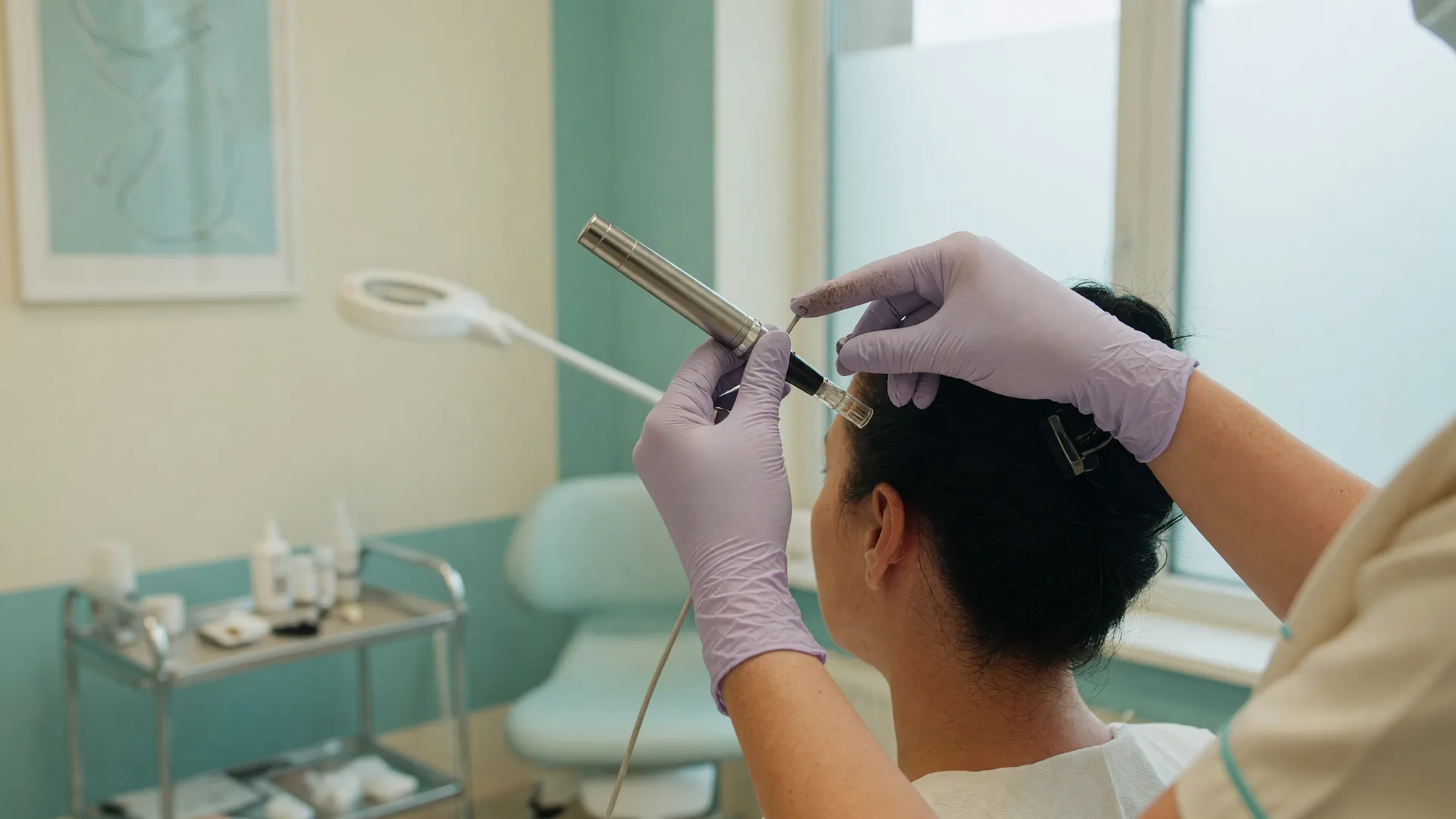
PRP for Hair Loss and Skin: What the Aesthetic Evidence Shows
PWritten by: Phil KimMedically reviewed by: Dr. Robert Aki, DPMLast medically reviewed: September 10, 2026
Platelet-rich plasma (PRP) is best known for joints and tendons, but it has also become a popular aesthetic treatment for hair loss and skin rejuvenation. At Aloha Stem Cell we offer PRP as part of our wellness and aesthetic lineup. This article reviews what the evidence shows about PRP for hair loss and skin, and how to set realistic expectations before you book.
Series
of PRP sessions typically used for hair and skin
3-6
months before visible aesthetic results often appear
5
clinical providers on the team
Why PRP is used in aesthetics
PRP is prepared from your own blood, spun in a centrifuge to concentrate the platelets that carry growth factors. Those growth factors are thought to support tissue repair and regeneration, which is the same idea behind its use in joints and tendons. In aesthetics, that translates into applications for thinning hair and for improving skin texture and tone, often delivered with microneedling to help the growth factors reach deeper layers.
PRP for hair loss
The most studied aesthetic use of PRP is androgenetic alopecia, the common pattern of hair thinning. Systematic reviews report that PRP can increase hair density and thickness in many people with this condition, typically with a series of treatments followed by maintenance sessions. Results are not guaranteed, and PRP is generally considered a supportive treatment for early to moderate thinning rather than a cure for advanced hair loss. It is also worth noting that a thorough evaluation is important, because not all hair loss is androgenetic.
PRP and microneedling for the skin
In skin care, PRP is most often combined with microneedling, a technique that creates tiny, controlled injuries to stimulate collagen. Studies suggest this combination can improve skin texture, tone, and the appearance of fine lines for some people. As with hair, the evidence supports modest, gradual improvement rather than dramatic transformation, and multiple sessions are typically involved.
“Systematic reviews report that PRP can increase hair density and thickness in many people with androgenetic alopecia, typically as a series of treatments followed by maintenance sessions.”
What to expect from a PRP aesthetic visit
A PRP aesthetic treatment at Aloha Stem Cell begins with a conversation about your goals and a look at the area in question, whether that is your scalp or your face. Blood is drawn at the clinic, spun to concentrate the platelets, and the PRP is applied or injected, often alongside microneedling, in a single outpatient visit. Numbing is used to keep you comfortable, and you leave with aftercare guidance and a realistic plan for how many sessions you may need.
Setting expectations honestly
PRP supports natural regeneration; results build gradually over multiple sessions
It is most helpful for early to moderate hair thinning, not advanced loss
A proper diagnosis matters, because not all hair loss is the same condition
Results vary from person to person and are not guaranteed
Ask what your specific plan, timeline, and cost will be before you start
A note from the clinic
Aesthetic treatments should be as honest as any other care we provide. At Aloha Stem Cell we will tell you plainly whether PRP is a good fit for your hair or skin goals, or whether a different path serves you better. Call (808) 593-2525 to start the conversation.
Our team is happy to listen to your story, answer your questions, and help you decide
whether a consultation makes sense. There is no pressure and no obligation.
The FDA now lists Regenecyte, a cord blood stem cell product, among approved cellular therapies. It is a real milestone for blood stem cell transplant patients, and it is not a treatment for joint pain. Here is what the approval is, what it is not, and why it matters when you read stem cell news.
In September 2026 the FDA granted Fast Track status to an experimental cell therapy for ALS, and in August researchers presented new Phase 1/2 data on a stem cell therapy for Parkinson's. Both are real advances and both remain investigational. Here is the honest read.
A stem cell-derived islet therapy restored insulin production in early trials, with 10 of 12 patients insulin-independent at one year. Here is what the 2025-2026 results show, what the FDA has and has not done, and what it means for people with diabetes.