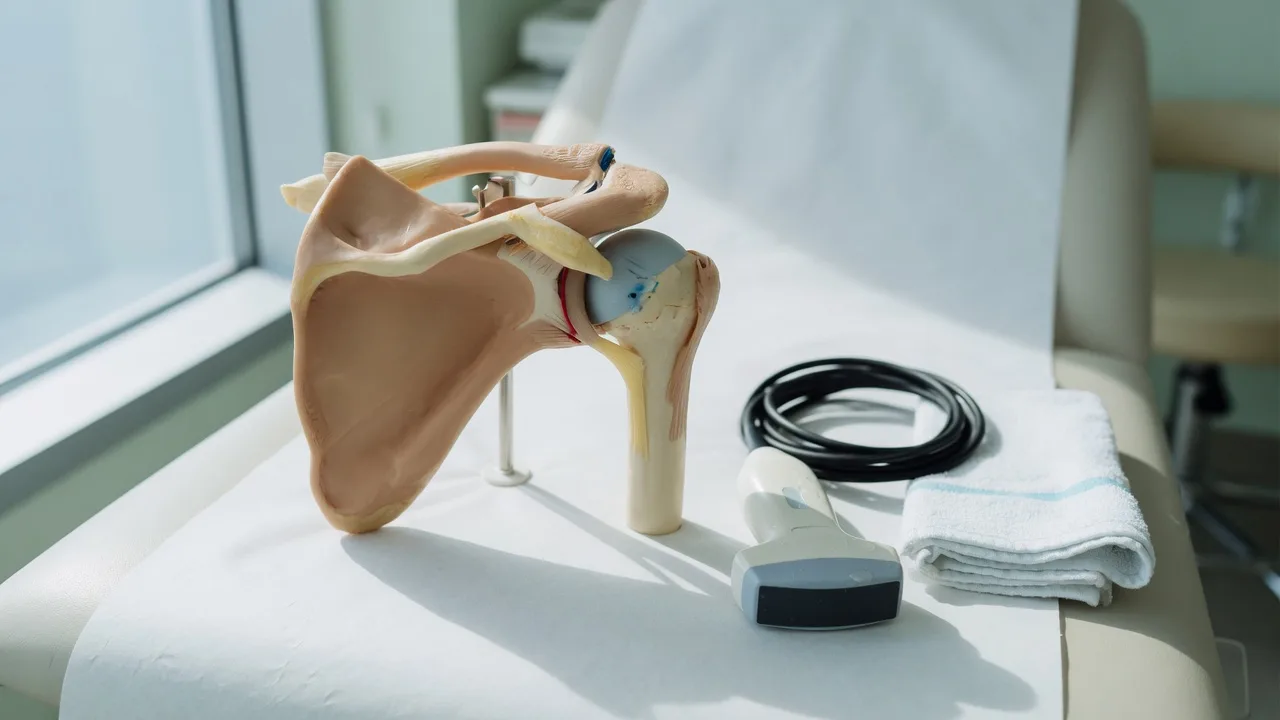
Stem Cells for Rotator Cuff Tears: The 2026 Evidence on What Works
PWritten by: Phil KimMedically reviewed by: Dr. Robert Aki, DPMLast medically reviewed: October 13, 2026
Shoulder pain from rotator cuff problems is one of the most common reasons patients call a regenerative medicine clinic, and the stem cell evidence for the shoulder is growing faster than for almost any other joint. In 2026 researchers published a four-year follow-up of bone marrow-derived stem cell injections for partial-thickness tears and a head-to-head comparison of regenerative biologics against standard pain care. This article reads that evidence honestly and explains where stem cells fit alongside PRP, physical therapy, and surgery.
4 years
of follow-up in the 2026 study of bone marrow cell injections for partial rotator cuff tears
2025
when a meta-analysis found MSC augmentation of rotator cuff repair raised the structural healing rate
0
FDA-approved stem cell products for rotator cuff tears, as of October 2026
Why the shoulder is a harder target than the knee
The rotator cuff is a group of four tendons that hold the ball of the shoulder joint in place and move the arm. Tendons have a poor blood supply, which is why they heal slowly, and the cuff sits in a tight space where tendinopathy and tears overlap. Injecting cells into a knee joint is comparatively straightforward; treating a cuff tendon requires precise placement and a realistic view of what the tissue can actually do.
The four-year follow-up of bone marrow cell injections
A 2026 observational study followed patients who received autologous bone marrow-derived mesenchymal stem cell injections for partial-thickness rotator cuff tears, with outcomes tracked for up to six years using the DASH questionnaire and pain scores. The authors reported that the treatment was safe and that improvements held over years of follow-up. It is a single-center observational study rather than a randomized trial, so it is evidence of durability more than proof against placebo, but it is the kind of long-term data the shoulder field has been missing.
“A 2026 four-year follow-up study of autologous bone marrow-derived stem cell injections for partial-thickness rotator cuff tears reported safety and durable improvements in pain and function, with outcomes tracked up to six years.”
Regenerative biologics versus standard care
In September 2026 a comparative study looked at regenerative biologics, including PRP, cell-based interventions, and peptides, against standard pharmacotherapy for chronic rotator cuff tendinopathy. The authors concluded that MSC-based interventions offered safer, more durable alternatives for selected patients who had not improved with conservative care. The study compares real-world approaches rather than a placebo, and its conclusion matches the general direction of the field: for the right patient, biologics can outperform repeated pain medication, but patient selection is everything.
What the surgery studies add
A 2025 meta-analysis found that adding mesenchymal stem cells to arthroscopic rotator cuff repair produced similar functional outcomes but a higher structural healing rate, meaning fewer re-tears seen on follow-up imaging. An ongoing randomized trial at Rush University Medical Center is comparing cuff repair with and without MSC augmentation, which should provide the strongest data yet. None of this makes stem cells a replacement for surgery in large or complete tears; it points to a supporting role in carefully selected cases.
Stem cells versus PRP for the shoulder
PRP remains the most studied regenerative option for the shoulder, with the strongest evidence for tendinopathy and more mixed results for tears. Stem cell injections are a step beyond PRP: they deliver living cells rather than concentrated platelets, they cost more, and the evidence base, while growing, is still smaller. For many patients the sensible sequence is conservative care first, PRP for tendinopathy, and a conversation about cell-based options for partial tears that have not responded, with surgery reserved for large or complete tears.
Questions to ask before shoulder stem cell treatment
Is my problem tendinopathy, a partial tear, or a full tear? Imaging matters.
Are the cells my own, and where are they collected from?
What does the published evidence show for my exact diagnosis?
Is the provider experienced with ultrasound-guided shoulder injections?
What is the plan if this does not work, including surgery?
The honest bottom line
The 2026 shoulder evidence is genuinely encouraging: four-year durability data, a favorable comparison against standard care, and a surgery-augmentation signal all point in the same direction. It is also early-stage evidence, mostly observational, and no stem cell product is FDA-approved for rotator cuff tears. For a Honolulu patient, the practical takeaway is to start with a proper diagnosis and a conversation about the whole ladder of options, from exercise to PRP to cell therapy to surgery, rather than jumping to the most expensive rung.
A note from the clinic
At Aloha Stem Cell our providers evaluate shoulder pain with a full history, an imaging review, and an honest read of the evidence before recommending anything. If a cell-based injection is a reasonable option for you, we will tell you why; if it is not, we will tell you that too. Call (808) 593-2525 or book a consultation.
Our team is happy to listen to your story, answer your questions, and help you decide
whether a consultation makes sense. There is no pressure and no obligation.
The 50th Turkey Trot has come and gone, and Honolulu's December race season is here: the Santa Hat 5K, the Jingle Bell Jog, the JAL Honolulu Marathon on December 13, and the Hawaii Kai Ultra Run. Here is what the next three weeks mean for your knees, tendons, and the timing of any regenerative treatment.
December is when flexible spending account dollars run out, and PRP or stem cell therapy for a diagnosed joint or tendon condition can be an eligible use of FSA and HSA funds. Here is how IRS rules actually work, what documentation you need, and what to ask your benefits administrator before year-end.
Regeneration Biomedical announced results on November 18, 2026 from its first-in-human Phase 1 trial of a Wnt-activated stem cell therapy for Alzheimer's: four of five patients showed cognitive improvement with no serious adverse events, and the FDA granted fast-track status. Here is what that does and does not mean.